
Common Types of Product Defects That Lead to Legal Claims
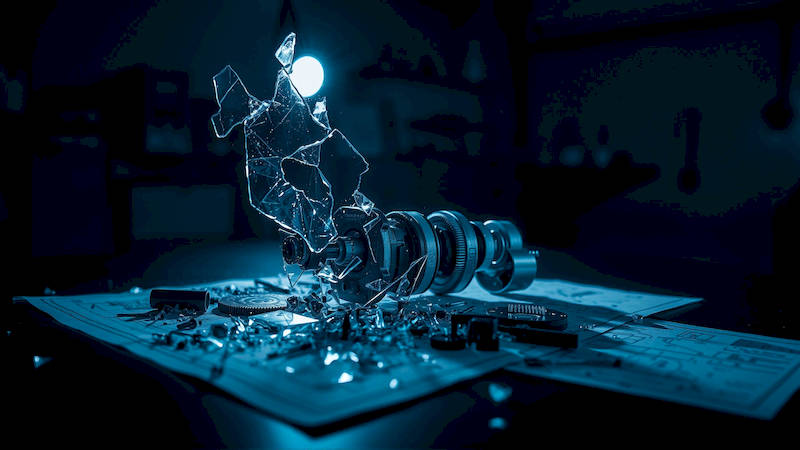
The world relies on products. From the simple tools we use daily to complex medical devices, we inherently trust that these items are safe for their intended purpose. This trust, however, is not always warranted. When a product malfunctions or causes harm due to a defect, it can lead to significant injuries, financial burdens, and emotional distress. Product liability law provides a legal avenue for individuals harmed by defective products to seek compensation from the responsible parties – manufacturers, distributors, and retailers. Understanding the various types of product defects is crucial for both consumers seeking justice and legal professionals navigating these complex cases. This article will delve into the common types of product defects that frequently lead to legal claims, exploring their nuances, providing real-world examples, and outlining the key considerations for potential litigation.
Product liability claims aren't simply about a product failing to work as expected; they hinge on proving the product was defective when it left the control of the manufacturer and that this defect directly caused the injury. This can be a complex legal undertaking, requiring expert testimony, thorough investigation, and a solid understanding of product design, manufacturing processes, and relevant safety standards. The consequences of a defective product can be devastating; therefore, knowing the different defect categories and the legal recourse available is paramount. The rate of product recalls reported to the Consumer Product Safety Commission (CPSC) fluctuates, but consistently remains in the hundreds each year, indicating the constant presence of product safety risks.
- Design Defects: Flaws in the Blueprint
- Manufacturing Defects: Errors in Production
- Warning Defects (Failure to Warn): Insufficient Instructions or Cautions
- Marketing Defects: Misleading Representations
- Component Part Defects: Faulty Pieces Within a Larger Product
- Complex Systems & Software Defects: Emerging Challenges
- Conclusion: Protecting Consumers Through Legal Recourse
Design Defects: Flaws in the Blueprint
A design defect exists when the inherent design of a product makes it unreasonably dangerous, even when manufactured precisely according to specifications. Unlike manufacturing defects (discussed later), a design defect affects all products made with that particular design. The product is hazardous by its very nature. To establish a design defect, plaintiffs often rely on evidence demonstrating a safer alternative design existed at the time the product was made, and that the manufacturer failed to adopt it. This frequently involves expert testimony comparing the product's design to industry standards and available technology.
Consider, for example, the litigation surrounding the Ford Pinto in the 1970s. The Pinto’s fuel tank placement behind the rear axle made it vulnerable to rupture and fire in relatively low-speed rear-end collisions. Despite knowing about this design flaw and the potential for catastrophic consequences, Ford made a cost-benefit analysis that determined it was cheaper to pay out settlements for resulting injuries and deaths than to redesign the fuel tank. This case became a landmark example of a design defect lawsuit, and highlighted the ethical responsibility manufacturers have to prioritize safety over profit. Proving a design defect often showcases the manufacturer's knowledge of the risk alongside the feasibility of a safer design.
Furthermore, demonstrating a design defect often necessitates showing that the risk of harm outweighs the product's utility. A highly beneficial product may be allowed to have a degree of inherent risk, but this risk must be reasonable in light of its advantages. This is evaluated through a risk-utility balancing test, comparing the likelihood and severity of potential harm against the product's usefulness and benefits to consumers.
Manufacturing Defects: Errors in Production
Manufacturing defects arise during the production process, resulting in a product that deviates from its intended design. Unlike design defects which affect all items of a given design, manufacturing defects are isolated to specific units. This could involve faulty materials, assembly errors, or inadequate quality control. Identifying a manufacturing defect typically requires demonstrating that the specific product in question differed from other products made by the manufacturer.
A common example is a batch of bicycles with brakes that were improperly installed due to a machine malfunction on the assembly line. While the brake design itself is safe, the improper installation creates a dangerous condition. Only the bicycles from that particular production run are affected. Plaintiffs in these cases will often present evidence of inadequate quality control procedures or a breakdown in the manufacturing process. According to a 2023 report by the National Association of Manufacturers, up to 25% of quality control issues stem from equipment malfunction, emphasizing the potential for manufacturing defects.
Successfully pursuing a claim based on a manufacturing defect requires establishing a clear connection between the defect and the injury. Expert testimony is often used to analyze the defective product and demonstrate how the manufacturing error led to the harm. This could involve metallurgical analysis of a faulty component or a detailed inspection of the assembly process.
Warning Defects (Failure to Warn): Insufficient Instructions or Cautions
Products are sometimes inherently dangerous, but can be used safely if users are adequately warned about the risks and provided with proper instructions for use. A warning defect, also known as a failure-to-warn claim, arises when a manufacturer fails to provide sufficient instructions or warnings about potential hazards associated with a product. This doesn’t mean the product is poorly designed or made – it means the manufacturer didn’t adequately communicate the risks to the consumer.
Consider a prescription medication with potentially severe side effects. A pharmaceutical company has a legal obligation to warn doctors and patients about those side effects, even if the medication is otherwise effective. Failure to do so can lead to serious harm and legal liability. A classic example is the litigation surrounding certain anti-depressants linked to increased suicidal thoughts in adolescents. The lawsuits centered on the claim that the warning labels were insufficient to adequately communicate this risk to patients and physicians.
Effective warnings must be conspicuous, clear, and understandable to the intended user. They need to specifically identify the hazard, explain how to avoid it, and describe the potential consequences of ignoring the warning. Warnings presented in small print or hidden within lengthy manuals are often deemed inadequate. Manufacturers are continually refining their warning documentation in response to ongoing case law and regulatory guidance.
Marketing Defects: Misleading Representations
While often overlapping with failure-to-warn defects, marketing defects focus specifically on misleading or inaccurate representations about a product’s capabilities or safety. This occurs when a manufacturer deliberately misleads consumers about the product’s features, benefits, or risks through advertising, labeling, or other promotional materials. These claims aren't necessarily related to the physical makeup of the product; instead, they involve inaccurate information provided to consumers.
For instance, if a cleaning product is marketed as “non-toxic” when it contains harmful chemicals, this could constitute a marketing defect. Similarly, if a toy is advertised as being safe for children under three years old despite posing a choking hazard, the manufacturer could be held liable. The key element of a marketing defect claim is the misleading nature of the representation itself. “Puffery” – subjective claims like “best on the market” – are generally not considered actionable, but factual claims about safety or performance are.
Demonstrating a marketing defect often requires gathering evidence of the misleading representations, such as advertisements, product labeling, and sales materials. Plaintiffs may also present expert testimony to refute the manufacturer's claims or demonstrate the product’s actual capabilities.
Component Part Defects: Faulty Pieces Within a Larger Product
Many products are assembled from numerous components, manufactured by different companies. A component part defect occurs when a defective part supplied by one manufacturer causes the overall product to fail and cause harm. Identifying and holding the responsible party liable in these situations can be complex, as it often involves multiple defendants.
A relevant example could be a steering component in a car manufactured by one company, but installed in a vehicle assembled by another. If the steering component fails due to a defect, causing an accident, both the component manufacturer and the vehicle assembler could be held liable. This derives from the principle of strict liability, meaning that even if one company wasn't directly negligent, they can be responsible for damages caused by a defective part within their product.
Determining liability in component part defect cases often hinges on establishing the "stream of commerce" – tracing the defective component from the original manufacturer to the final consumer. This can involve detailed investigations into the supply chain and contractual agreements between the various parties involved.
Complex Systems & Software Defects: Emerging Challenges
With the proliferation of increasingly complex products incorporating software and interconnected systems, a new category of product defects is emerging. These defects often involve glitches in software code, errors in algorithmic design, or failures in communication between different components. These are particularly challenging to litigate due to the intricate nature of the technology and the difficulty in identifying the root cause of the problem.
Consider autonomous vehicles, where software malfunctions can lead to accidents. Determining whether a crash was caused by a software bug, a sensor failure, or a human error requires sophisticated forensic analysis and expert testimony in the field of artificial intelligence and computer science. The growing Internet of Things (IoT) – connected devices collecting and transmitting data – also presents new avenues for product liability claims. A defective smart thermostat that causes a fire, or a compromised medical device that delivers an incorrect dosage, could both give rise to significant legal claims.
Conclusion: Protecting Consumers Through Legal Recourse
Product liability law plays a vital role in safeguarding consumers by holding manufacturers and other responsible parties accountable for placing defective products into the market. Understanding the common types of defects – design, manufacturing, warning, marketing, component part, and emerging system & software defects – is essential for anyone impacted by a faulty product. If you or a loved one has been injured by a product, it’s crucial to consult with a qualified attorney specializing in product liability law. Document all evidence, including the product itself, medical records, and any relevant documentation related to the product’s purchase and use. Remember, a successful product liability claim isn't simply about proving a product malfunctioned; it’s about demonstrating a defect existed when the product left the manufacturer's control and directly caused your injuries. By understanding your rights and seeking legal counsel, you can navigate the complexities of product liability litigation and pursue the compensation you deserve.
Deja una respuesta